
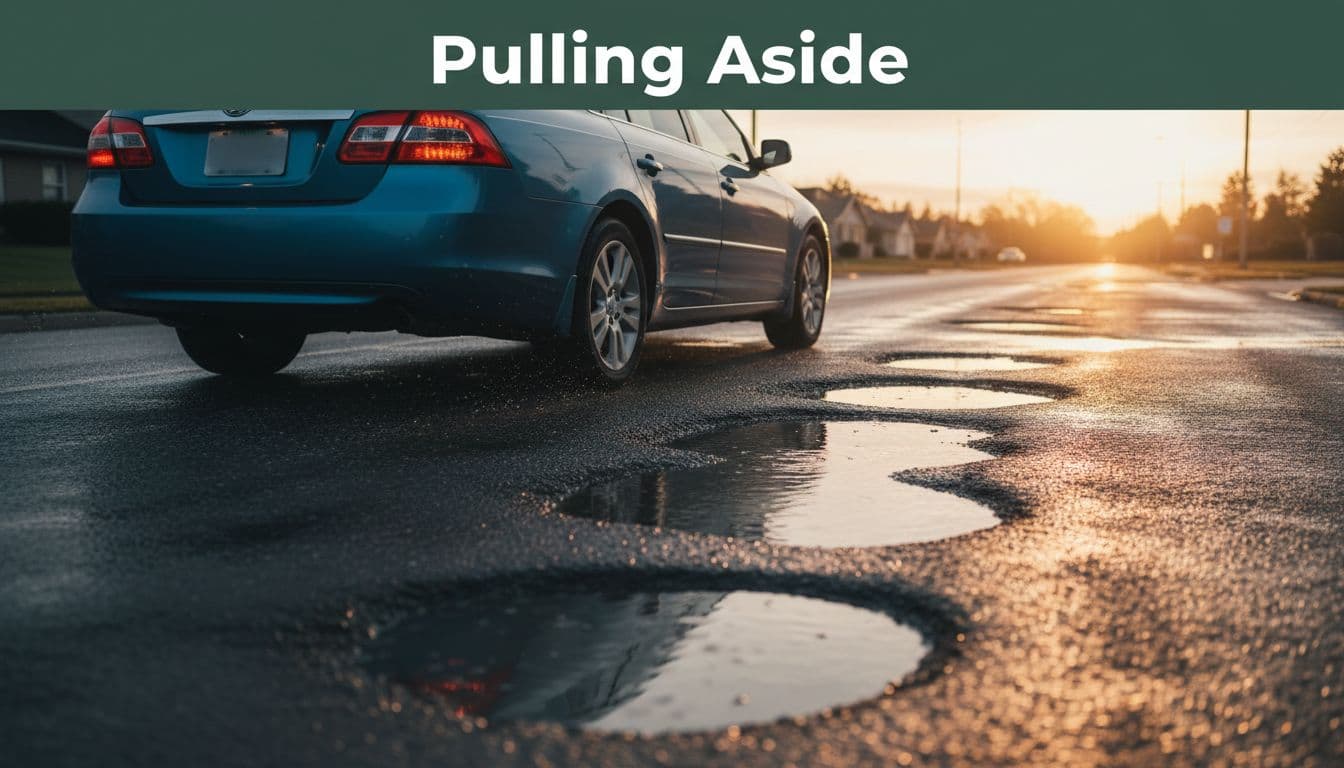
Potholes, often formed by freeze-thaw cycles, pose a primary road hazard. That road impact from hitting a pothole can do more than jolt your coffee. It can knock your car out of line before you reach the next stoplight. If the steering feels odd afterward, don’t shrug it off. A pothole can upset wheel alignment, but it can also damage a tire, bend a wheel, or strain suspension parts.
The trick is knowing which changes matter and when they cross into a safety issue, which is why a professional inspection is often necessary following such a significant bump. Start with the symptoms that show up first.
What a pothole can throw out of line
Wheel alignment refers to the precise settings of camber, toe, and caster that help your tires point straight and wear evenly. When those angles shift, alignment issues may cause the car to drift, the steering wheel to sit crooked, and the tread to scrub away faster than it should.
Hitting a pothole causes a sharp upward hit. That force moves through the tire, wheel, steering parts, and suspension. The suspension system is the network of components that supports the vehicle weight and maintains tire contact with the road, and pothole damage can compromise these suspension components.
Think of alignment like a shopping cart after a hard bump. The wheels still roll, but they no longer track cleanly. In a car, that small change can make the whole vehicle feel unsettled.
Still, alignment isn’t the only thing at risk. A deep pothole can bruise a tire, bend a rim, or damage parts like a tie rod, control arms, or shocks and struts. That’s why a shop should inspect the full area, not only set the angles and send you back out. This overview of what gets damaged after a pothole explains that chain reaction well.
Some problems show up right away. Others take a day or two. In other words, a wheel alignment pothole issue may hide until the car starts wandering, the steering feels off, or one tire begins wearing on a single edge.
The clearest signs after the impact
Sometimes the warning signs are obvious. More often, they creep in during the next few drives. Pay attention to anything that feels different from normal.
Vehicle pulling to one side
On a flat, straight road, the car should track straight with light steering input. If you keep correcting left or right, something’s off. Vehicle pulling is one of the most common signs of alignment trouble after a pothole hit.
Road slope can cause a small drift, so look for a pattern. If the pull stays the same on different roads, don’t ignore it. A technician-written guide on car pulling after hitting a pothole makes the same point, and it also notes that bent suspension parts can feel similar.
Off-center steering wheel or wheel vibration
When the front wheels point straight, the steering wheel should look centered too. An off-center steering wheel while you drive straight means the angles may have shifted. That’s a strong clue after a hard impact.
Wheel vibration is another sign, but it needs context. A light shimmy can come from alignment. A strong shake often points to a bent wheel, damaged tire, or both. Because those problems can get worse with speed, they deserve a prompt inspection.
You may also notice the steering feels loose, heavy, or slow to return after a turn. None of that is normal after a pothole. If the wheel suddenly feels different, trust that change.
Tire wear shows up faster than you think
Misaligned tires don’t roll cleanly. Instead, they scrub across the road surface. As a result, uneven tread wear can happen much faster on one edge than the other, leading to premature tire wear and costly replacements.
Look for feathering, inside-edge wear, or patches that look smoother than the rest of the tread. You may also notice weaker handling in curves or a car that feels less planted in rain due to compromised handling and alignment. Some drivers first catch tire wear during a quick walk-around, which is why a tread check matters after any hard hit. For a plain-language look at why pothole hits affect alignment, this explanation covers the basics.

When it’s unsafe to keep driving
A mild pull may let you drive carefully to a nearby shop. Still, some pothole damage means you should stop and get help.
If the car suddenly pulls hard, shakes badly, or loses air after the impact, treat it as a safety problem.
After a hard hit, pull over when it’s safe. Take a quick look at the tire and wheel. A sidewall bubble, torn rubber, bent rim, or tire pressure loss means the car may not be safe to drive.
Watch for these red flags:
- Strong pull or crooked steering: The car won’t stay in its lane without constant correction.
- Visible tire damage: A bubble, cut, bent rim, or tire pressure loss can lead to a blowout.
- Heavy vibration: The wheel, tire, or suspension may be bent.
- Clunking, scraping, or rubbing: Something may be loose or out of place.
If any of those show up, skip highway speeds. If the tire is losing air, the rim looks bent, or the steering feels unstable, call for a tow instead.
Even when the car seems drivable, book a wheel alignment check soon. A proper check should include the tires, wheels, steering, suspension, and computerized four-wheel alignment. That way, the shop fixes the cause, not only the symptom, while restoring fuel economy and steering stability.
That pothole thud fades fast, but the damage can stick around. When your car pulls, the wheel sits crooked, or the tread starts wearing unevenly, don’t wait for it to sort itself out.
A prompt inspection is the smart move after a hard impact. If pothole damage requires replacement of suspension components, use OEM parts. If the car feels different, get it checked before a small problem turns into a tire, wheel, or suspension repair.
Hitting a pothole justifies a prompt trip to the shop.