
Hitting potholes can rattle your whole car, but the damage they leave behind is not always obvious. One hard hit can create a tire sidewall bubble, and that tire bulge can turn into a sudden tire blowout without much warning.
The tricky part is that the tire may still hold air for a while. That can make the damage easy to miss if you only glance at the tread and move on. A quick check after the impact can save you from a flat tire, a roadside stop, or worse.
Start with the sidewall, because that is where this damage hides.
Key Takeaways
- Recognize the danger: A tire sidewall bubble indicates severe internal structural failure, such as broken cords or belt separation, which can lead to a sudden, catastrophic blowout.
- Inspect after impact: Always visually inspect your tires for bulges, unevenness, or cuts after hitting a pothole, curb, or road debris, even if the tire seems to be holding air.
- Avoid risky repairs: Sidewall bubbles cannot be safely patched or repaired; once this damage occurs, the tire must be replaced immediately to ensure vehicle safety.
- Prioritize professional assessment: If you suspect tire damage, avoid driving at high speeds and have a mechanic check both the tire and the wheel rim, as pothole impacts often cause secondary suspension or alignment issues.
What a Tire Sidewall Bubble Looks Like
The outer sidewall is the flexible part of the tire located between the tread and the rim. It is important to note that some radial tires may have minor undulations or indentations resulting from the manufacturing process. However, a distinct tire bulge is a clear sign of structural failure rather than a manufacturing defect. When this area is compromised, the inner layers weaken, causing the rubber to swell outward. If left ignored, this damage can lead to a dangerous tire blowout.
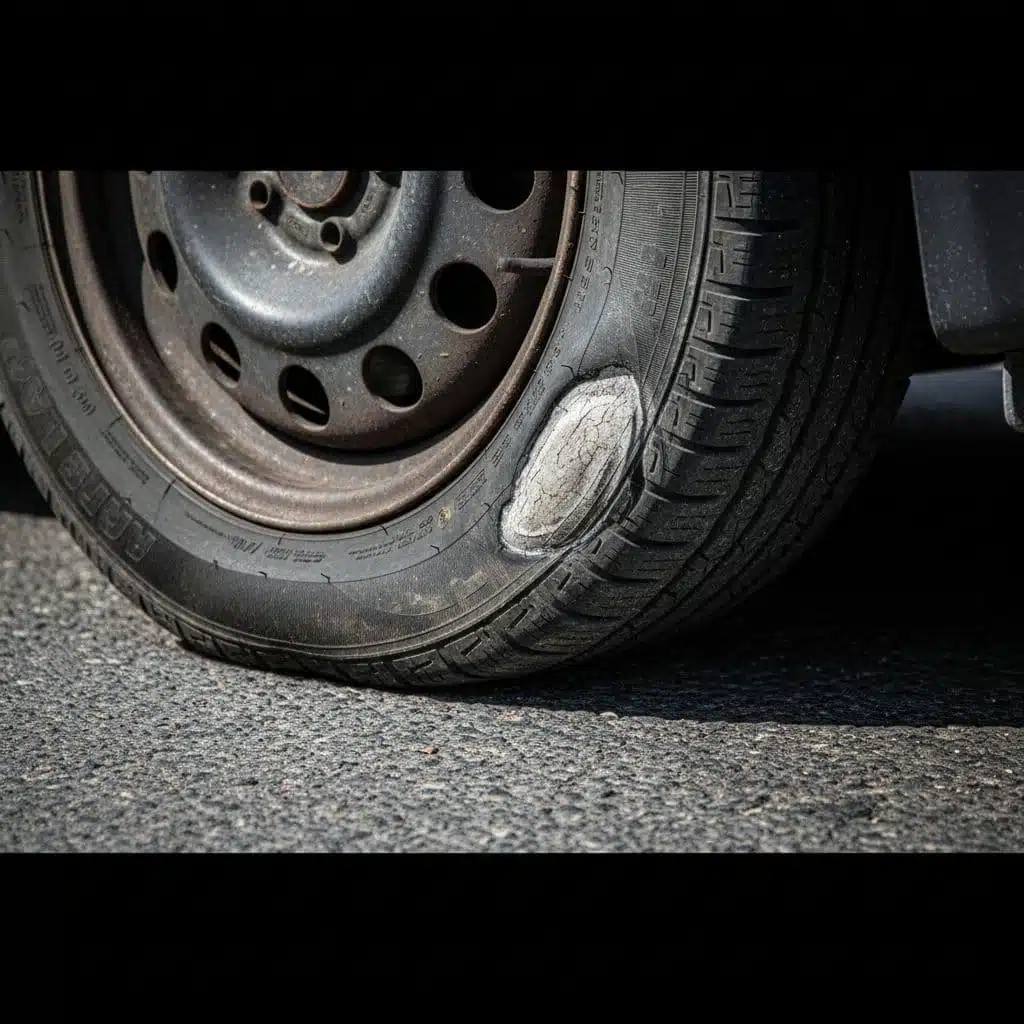
A bubble does not always look dramatic at first. Sometimes it is only visible from an angle, and sometimes you will feel it before you see it. Run your eyes along the sidewall, then look closely near the point where the tire meets the rim.
A normal sidewall should look smooth and even. A bubble breaks that line. If the tire looks lopsided, stretched, or swollen in one area, stop driving it until a professional checks it.
This kind of damage matters because the sidewall holds the tire together under load. Once it weakens, every mile adds stress. A hit that seemed small at first can quickly become a serious safety problem.
Why a Pothole Can Cause This Damage
Potholes hit hardest where the tire is most vulnerable. While the tread is built to handle road wear, the sidewall is designed to flex. When the wheel drops into a deep hole, the tire can pinch between the rim and the road surface, leading to severe impact damage. Similar damage can occur if you strike a curb, drive over sharp speed bumps, or roll over hard road debris.
This pinch can break the internal cords and sidewall plies that provide the tire with its strength. Once the internal structure is compromised, the inner liner can no longer hold the shape of the tire casing securely. The outer rubber may stay in place for a short time, but the weakened section begins to bulge outward. Air pressure then pushes against that fragile spot, causing a visible bubble to form.
Several factors can make the problem worse, including high speeds, sharp pothole edges, and tire under-inflation. When a tire lacks proper tire pressure, it is less capable of absorbing the force of an impact. A hard hit on a front tire often causes more significant trouble, as the steering angle can direct the force into the sidewall in a particularly damaging way.
While the good car maintenance Lodi Wisconsin drivers keep up with helps reduce overall risk, no tire is fully protected from a hard strike. After hitting a deep pothole, the safe move is to inspect your tires right away rather than simply hoping for the best.
How to Inspect the Tire Safely
Performing a thorough tire inspection is best done when the car is parked on level ground. Use daylight if possible, and avoid crawling underneath the vehicle to stay safe.
- Look at the tire from a few steps back.
Check whether one tire sits lower, leans outward, or looks uneven compared with the others. Examine the tire tread as well to ensure there is no irregular wear that could indicate an alignment issue. - Move closer and inspect the sidewall.
Scan the entire sidewall, not just the spot that took the impact. A bubble can form anywhere around the circumference of the tire. - Turn the wheel if needed.
On a front tire, turn the steering wheel so you can see more of the sidewall and the inside edge. While you are there, look for any signs of rim damage, such as bends or cracks in the metal, which often occur alongside sidewall issues. - Feel the sidewall lightly.
Run your hand across the rubber and notice any raised spot, soft area, or sharp cut. Do not press hard. If you notice a visible tire bulge, the internal structure of the tire has likely been compromised. - Compare it with the opposite tire.
The condition of the opposite tire often makes the damaged side easier to spot. The difference can be clear once you look at them side by side.
If you hear a thump, feel a vibration, or see a tire bulge, you should stop using the tire immediately. Rather than driving further on a damaged wheel, consider installing your spare tire. A local auto repair shop Wisconsin drivers trust can then confirm whether the tire, rim, or wheel alignment sustained permanent damage.
If the bubble is visible, the tire is already compromised.
When a Bubble Means the Tire Has to Go
While some tread punctures are repairable, a sidewall bubble represents irreparable damage that mandates an immediate tire replacement. The sidewall of your tire is designed to flex constantly during operation, which makes it impossible for a traditional plug or patch to hold securely.
A tire with this type of injury is experiencing sidewall separation or a broken belt, meaning the internal structural integrity of the rubber has been compromised. A tire with a bubble might hold air today and experience a catastrophic blowout tomorrow. If the impact has reached the internal cords, the tire no longer possesses the necessary strength to carry the weight of your vehicle safely.
Use the quick guide below to evaluate the risk and determine if your tire needs to be replaced.
| What you see | What it usually means |
|---|---|
| A visible bulge on the sidewall | Internal tire damage and broken belt cords |
| Repeated air loss after a pothole impact | The tire structure is likely splitting or flexing open |
| A shaking feel at highway speeds | The tire casing or the wheel rim may be out of shape |
| A visible cut, tear, or exposed metal cord | The tire has reached total failure and requires immediate replacement |
| A loud thump that matches the rotation of one wheel | The damaged spot is bulging significantly under vehicle load |
| Checking your tire warranty | Most bubbles are classified as a road hazard rather than a manufacturing defect |
Discovering a bubble, especially when paired with any of the signs listed above, is a clear signal that the vehicle should be parked. If the affected tire is located on a driven axle, the risk increases because that wheel is under constant torque and load.
If you are unsure about the extent of the damage, a mechanic near Lodi WI can inspect your vehicle to see if the rim is bent, the bead is damaged, or the suspension components took a heavy hit. This professional assessment is important, as tire damage often coincides with secondary mechanical issues after a significant pothole strike.
What to Do Next if You Spot One
If the tire still holds air but the bubble is present, keep your drive short and slow. The goal is to reach help safely, not to test the structural integrity of the tire on the road.
For auto repair Lodi WI drivers count on after hitting a pothole, request a thorough tire inspection, wheel check, and alignment review. If the shop examines the damage in person, you will receive a professional recommendation regarding tire replacement and whether any additional suspension work is necessary. It is also wise to check your tire warranty, as many road hazard protection plans cover the cost of damage caused by potholes.
If you need help getting the vehicle to a safe place, a towing service Columbia County WI residents trust is a safer choice than driving on a compromised sidewall. When the tire appears unstable or begins losing air pressure rapidly, the 24 hour towing Lodi Wisconsin drivers rely on can keep a bad situation from becoming dangerous.
You can also read about our auto repair shop if you want to learn more about the team that will be evaluating your tires. If the vehicle is older and you are weighing the cost of repairs against looking at used cars for sale Lodi WI offers, a professional inspection can help you make an informed financial decision.
As part of your ongoing car maintenance Lodi Wisconsin drivers should prioritize, regular tire pressure checks and visual inspections after hitting potholes must become a habit. These simple tasks take very little time, and they can prevent a minor impact from turning into a stranded night on the shoulder. Consistent tire maintenance is the best way to extend the life of your vehicle.
If you are unsure whether your tire is safe to drive on, contact us today before you put more miles on it.
Frequently Asked Questions
Is it safe to drive on a tire with a small bubble?
No, it is not safe to drive on a tire with a visible bubble. Even a small bulge indicates that the internal structural integrity of the tire is compromised, and it could burst without warning at any time.
Can a tire sidewall bubble be repaired?
No, sidewall damage cannot be repaired using patches or plugs. Because the sidewall is the most flexible part of the tire and undergoes constant stress, any compromise to its internal structure requires the tire to be replaced entirely.
Why did a pothole cause a bubble if I didn’t get a flat tire?
A bubble forms when the internal cords of the tire break, but the outer rubber casing remains intact enough to temporarily hold air. The air pressure then pushes against the weakened area, creating a visible bulge that can worsen rapidly as you continue to drive.
Should I replace just the damaged tire or all of them?
Usually, you should replace the damaged tire with one of the same brand, model, and size, but you may need to replace the tire on the opposite side as well to maintain even tread wear. A professional technician can determine if replacing just one is safe or if the wear difference requires a pair replacement.
Conclusion
A pothole can leave behind more than just a bent wheel or a jolt in your steering. A tire sidewall bubble remains one of the most critical warning signs to watch for because it indicates severe internal impact damage. Ignoring these structural compromises significantly increases the risk of sudden tire failure or a dangerous tire blowout while driving.
The safest approach is simple. Inspect the sidewall closely, compare it with your other tires, and stop driving if you notice a tire bulge or hear any unusual sounds coming from the wheel well. When in doubt, have a professional technician evaluate the tire before it has a chance to fail on the road.