
Worn suspension parts do not always fail with a dramatic snap. Control arm bushings often wear down gradually, eventually sending small warnings through the steering wheel, tires, and front end. In particular, the lower control arm bushing is a common wear point that frequently requires attention due to the significant stress it absorbs. By paying close attention to these suspension bushings, you can catch issues early to save your tires, protect your wheel alignment, and keep your vehicle handling smoothly. The warning signs are usually present long before a minor issue develops into a serious mechanical failure.
Key Takeaways
- Bushing wear is often gradual, manifesting as clunking noises, loose steering, or subtle vibration through the wheel.
- Uneven tire wear is a primary indicator of alignment issues caused by failing chassis bushings.
- Ignoring worn bushings forces other suspension components, like tie rods and end links, to overcompensate, leading to more extensive and costly repairs.
- Professional inspection, including pry-bar tests and road assessments, is necessary to confirm bushing failure and protect your vehicle’s handling precision.
Control arm bushing wear shows up in the steering wheel
Control arm bushings sit between the control arm and the car’s frame or subframe. They cushion movement and help keep the wheel in the right place. When they crack, soften, or separate, the front lower control arm can shift more than it should.
That extra movement often shows up as a clunk when you hit bumps, a sloppy steering feel, or a front end that does not settle the way it used to. A rough driveway, pothole, or sharp turn can make it more obvious.
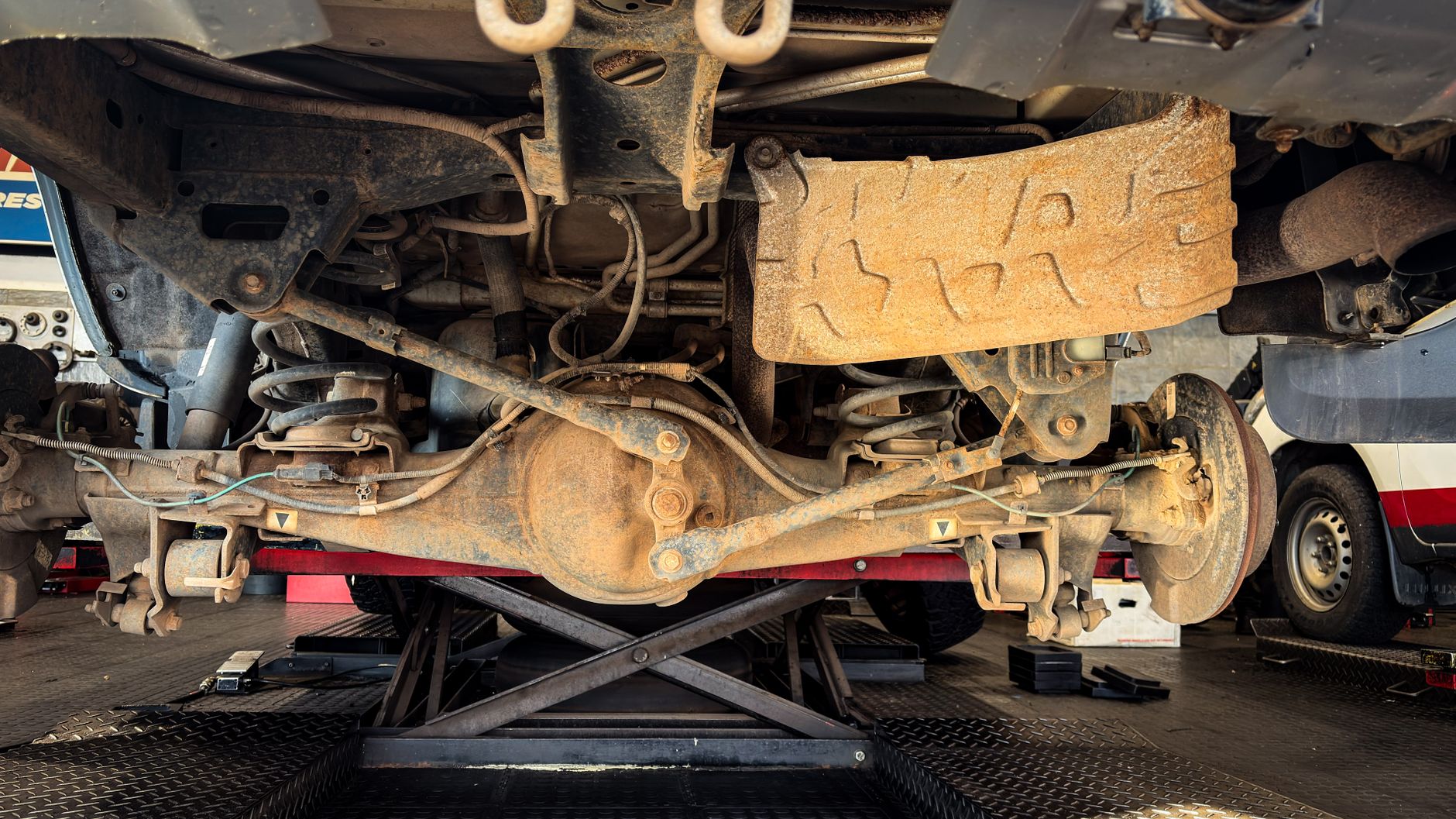
Photo by Magda Ehlers
These symptoms often travel together.
| Sign | What you may notice | What it can point to |
|---|---|---|
| Clunking or rattling | A sharp knock when driving over road bumps | The control arm is moving too much |
| Loose steering | The wheel feels vague or needs constant correction | The bushing is no longer holding the arm steady |
| Brake shimmy | The car shakes when slowing down | The suspension shifts under load |
| Squeaks or creaks | Noise at low speed or on turns | Rubber wear or dry, cracked bushings |
If the sound happens every time you hit the same road bumps, pay attention. A one-time rattle can come from many places, but repeat noise under the same conditions is a real clue.
Uneven tire wear can point to alignment trouble
Worn chassis bushings can allow the wheels to shift just enough to throw your alignment out of specification. While these alignment changes may be subtle at first, your tires will react to the misalignment quite quickly. You might notice accelerated wear on the inner edges, premature bald spots on a specific tire, or a vehicle that constantly pulls to one side while driving.
This is exactly why the problem often surfaces during routine commutes before a driver even considers the state of their suspension parts. The car might feel perfectly fine around town, but the tires are always telling the truth about the health of your chassis.

Anyone comparing used cars for sale Lodi WI should inspect the tires closely before finalizing a purchase. If you notice uneven tread patterns, it could indicate that the suspension requires professional attention. During your inspection, be sure to evaluate both the driver side suspension and the passenger side for signs of wear. If one side is damaged, you may need a passenger side replacement to ensure your vehicle maintains balanced, predictable handling on the road.
A steering wheel that sits off-center is another primary clue of failing bushings. The same is true for a vehicle that requires constant, small steering corrections while driving on a straight road. When these components lose their structural integrity, the wheel cannot hold its position as precisely as the manufacturer intended.
If you have been ignoring a mild pull or an odd tire wear pattern, now is the time to treat it as a warning sign rather than a simple quirk of an aging vehicle.
Worn bushings can stress the rest of the suspension
A bad bushing rarely remains an isolated issue for long. Once the control arm assembly begins shifting due to degraded rubber, other vital suspension components are forced to compensate. Key parts like tie rods and sway bar end links frequently take the brunt of this extra movement, leading to accelerated wear across the entire front end.
This systemic instability often results in a wobbly ride, where the vehicle feels disconnected from the road. You might experience excessive leaning during turns, unpredictable bouncing over bumps, or harsh metallic clunking when braking. This unwanted noise and vibration usually grow worse over time, signaling that your vehicle is struggling to maintain proper geometry.
If the steering feels loose and the front end clunks over small bumps, don’t wait for a bigger failure.
The most deceptive aspect of this wear is how easily it hides on smooth pavement. During a casual test drive, the car may seem perfectly fine. However, a rough patch, a sudden hard stop, or a sharp turn will immediately expose the underlying instability.
That is why suspension wear should never be dismissed as just an old car thing. When your components show signs of failing, they are telling you that the front end has too much play, and that movement continuously spreads unnecessary stress across the entire vehicle system.
How a mechanic checks the bushings
A professional inspection begins by lifting the vehicle to get a close look at the front suspension. A technician will examine the components for cracked rubber, separation, dry rot, and excessive side-to-side movement. During this process, they often measure the bolt diameter to ensure the hardware maintains a perfect fit within the housing. A simple pry bar test is typically used to determine if the control arm shifts too easily, which indicates the rubber bushings have lost their structural integrity.
A short road test provides additional context. Noise that occurs during braking, turning, or while driving over small bumps offers clues that may not be apparent while the vehicle is on a lift. If these issues persist, a formal alignment check can confirm that the suspension is no longer holding its position correctly.
When it is time for repairs, you have several options to consider. You can choose factory-style rubber bushings for a traditional ride, or upgrade to performance-oriented polyurethane bushings from a brand like Energy Suspension if you prefer more responsive handling. Depending on the condition of your vehicle, a mechanic might suggest a complete replacement kit or a Moog suspension kit to refresh the entire assembly. For those looking to streamline the repair process, some components even come pre-assembled. Investing in a durable replacement kit is often the best way to ensure long-term stability.
If you are looking for a local auto repair shop story and values, it helps to find one that explains the problem in plain language. A local auto repair shop in Wisconsin should be able to inspect the bushings, check the rest of the front end, and tell you whether the car needs repair now or in the near future.
That matters for everyday driving and for the regular car maintenance Lodi Wisconsin drivers count on. It also matters when you are searching for a mechanic near Lodi WI or planning auto repair Lodi WI work after a noisy test drive.
A good inspection can also protect you when you are shopping or selling. If you are comparing a daily driver to used cars for sale Lodi WI, suspension wear should be part of the decision, not an afterthought.
When to park the car and call for help
Some bushing problems are mild, but others make the car feel unsafe very quickly. If the front end clunks loudly, the steering feels sloppy, or the vehicle pulls hard after hitting a bump, you should park the car and have it inspected. Prioritizing timely auto repair replacement for these components is essential to prevent secondary damage to other parts of your vehicle. This is especially true for high performance cars, where the precision of your elastomer suspension is vital for maintaining handling characteristics and safety on the road.
You should also stop driving if you notice your tires rubbing, the wheel feels unstable, or the suspension noise worsens significantly in a short period. At that point, a tow is much safer than pushing your luck. A 24 hour towing Lodi Wisconsin option can get your vehicle to a shop safely without adding further strain to your damaged suspension.
That is also where a towing service Columbia County WI can help if the suspension feels loose enough that you do not feel comfortable driving it across town. A short tow is always cheaper than a larger repair caused by one more rough trip.
If the symptoms are getting louder or the car feels unsafe, Contact Us Today and get it looked at before the damage spreads.
Frequently Asked Questions
How do I know if my control arm bushings are failing without a professional inspection?
Look for clear warning signs like sharp clunking sounds when driving over bumps, steering that feels vague or disconnected, and uneven wear patterns on your tires. If your vehicle consistently pulls to one side or the steering wheel sits off-center while driving straight, these are strong indicators that your bushings have lost their structural integrity.
Can I continue driving my car if the bushings are worn?
While you might be able to drive on mildly worn bushings for a short period, it is not recommended as it risks further damage to your suspension and tires. If you notice loud clunking, unstable steering, or a vehicle that feels unsafe to handle, you should stop driving immediately and arrange for a professional inspection.
What is the difference between rubber and polyurethane bushings?
Factory-style rubber bushings are designed for a smooth, traditional ride and excel at absorbing road vibrations. Polyurethane bushings are typically firmer and more durable, offering improved handling response and performance, which is often preferred by those looking for more precise feedback from their vehicle.
Does replacing control arm bushings require an alignment?
Yes, it is highly recommended to perform a professional wheel alignment immediately after replacing control arm bushings. Because these components are integral to maintaining the vehicle’s geometry, replacing them will shift the suspension alignment, and failing to recalibrate could lead to rapid, uneven tire wear.
Conclusion
Control arm bushings often wear out in small, easy to miss ways. The most significant clues typically involve unusual noises, loose steering, and uneven tire wear. Monitoring your suspension performance is essential because these parts are critical to vehicle stability and handling.
When these warning signs appear together, your vehicle is clearly asking for attention. A quick professional inspection now can prevent a small rubber component from causing extensive damage elsewhere. By addressing worn a-arm bushings early, you can maintain your car’s ride quality and avoid a much more expensive repair down the road.