
A bitter Wisconsin morning can expose a weak starting system before you even leave the driveway. An engine block heater can help with cold starts, but safe use depends on your vehicle’s instructions, sound wiring, and a suitable electrical connection.
For drivers in Lodi and Columbia County, checking the setup before winter is easier than troubleshooting it in blowing snow. A heater also can’t replace a healthy battery or proper coolant protection. Start by confirming what your vehicle has and how its manufacturer says to use it.
Key Takeaways
- Follow your vehicle’s manual for electrical requirements, temperature guidance, and operating time.
- Use an intact, grounded outdoor extension cord and a GFCI-protected outlet, keeping connections dry and clear of snow.
- Disconnect and secure the heater cord before starting or driving, and get damaged wiring or repeated electrical trips checked.
These habits belong alongside battery testing, coolant checks, and other winter maintenance.
Know What Your Engine Block Heater Does
Confirm the equipment and instructions
A block heater supplies heat to the engine before startup. Many designs warm engine coolant through an element installed in the engine block. However, equipment varies, so don’t assume every visible underhood plug belongs to the same type of heater.
Locate the instructions for your vehicle’s model year and engine. If someone installed an aftermarket heater, you’ll also need its manufacturer’s directions. Check the operating voltage, extension-cord requirements, and recommended heating interval.
For example, Ford’s engine block heater guidance describes a heater element, wiring harness, and grounded 120-volt AC supply. Your own manual remains the reference for your vehicle.
Understand its limits
A heater helps prepare the engine for cold-weather starting. It doesn’t charge the battery, repair a failing starter, or correct inadequate antifreeze protection.
Because cold reduces battery output while thicker oil increases starting effort, several problems can appear together. Slow cranking deserves attention even when you regularly plug in.
Also, an engine heater doesn’t guarantee a warm passenger compartment when you first open the door. Cabin heat depends on the vehicle’s heating system and operating conditions. Persistent cold airflow or poor defrosting needs a separate diagnosis, especially when it affects visibility.
Inspect the Heater Cord Before the First Freeze
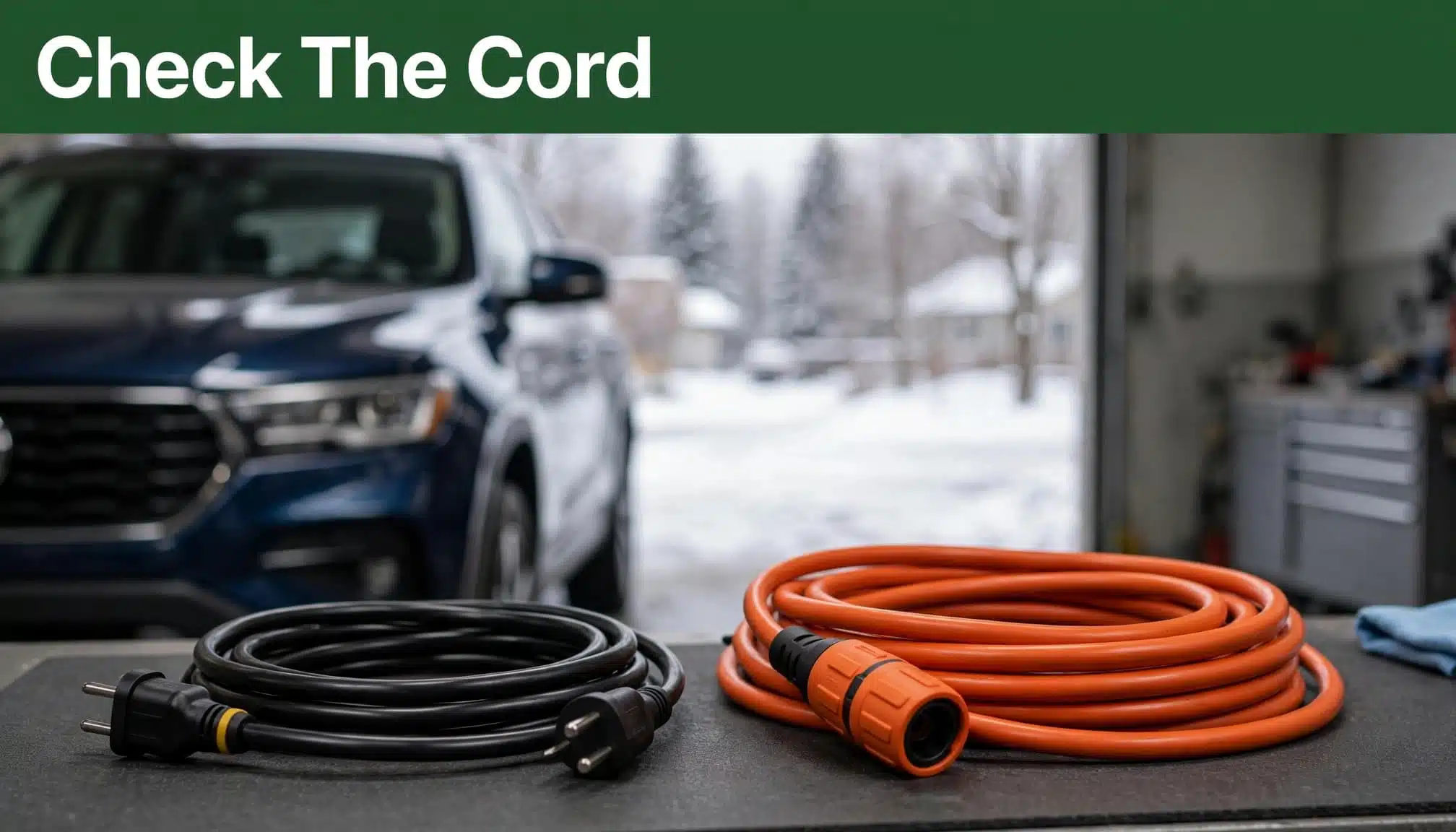
Look for damage and poor routing
Inspect the heater lead while it’s unplugged and the engine is cool. Look for cracked insulation, exposed conductors, loose connectors, corrosion, and damaged plug blades.
Next, check where the cord travels through the engine compartment. It shouldn’t contact hot exhaust components, moving belts, or fans. Keep its original routing unless a qualified technician makes a repair.
A hood, grille edge, or sharp bracket can damage insulation over time. Don’t close the hood on the wiring or pull the cord tight across metal edges. If you find damage, leave the heater disconnected. Tape over a damaged section isn’t a dependable permanent repair.
Choose an appropriate extension cord
Use a grounded, three-wire extension cord rated for outdoor use and cold temperatures. Its wire size, length, and electrical capacity must meet the heater manufacturer’s requirements.
One Ford manual recommends a 16-gauge outdoor cord certified by UL or CSA. That specification applies to the equipment covered by that manual, so don’t treat it as a universal minimum.
Use the shortest practical cord and avoid joining multiple extension cords. An indoor cord isn’t suitable for a snowy driveway. Check the extension cord as carefully as the vehicle lead, including both plugs and any areas previously crushed by a door.
Connect to a Safe Outdoor Power Supply
Use grounding and ground-fault protection
Connect the heater to the electrical supply specified by its manufacturer. Use a grounded outlet with GFCI protection, which disconnects power when it detects current leaking toward ground.
Never remove the grounding pin or use an adapter to bypass it. If the receptacle is loose, damaged, or unsuitable for outdoor use, have an electrician address it before plugging in.
Vehicle specifications differ. The 2022 Ram 2500/3500 heater instructions call for a 110-115-volt AC outlet and grounded, three-wire extension cord. Check your own equipment rather than assuming another truck’s instructions apply.

Keep connections dry and protected
Snow becomes water as temperatures change. Keep plug connections out of snowbanks, puddles, and areas where roof runoff collects. Use the outlet’s appropriate weather-protective cover.
With power disconnected, check that the terminals are clean and dry before joining the plugs firmly. Route the cord away from walking paths, tires, shovels, and snowblower routes. Don’t stretch it across a public sidewalk.
Ford guidance also calls for checking connections for unusual heat after about 30 minutes. If you notice scorching, a burning smell, or excessive heat, shut off power safely and stop using the setup. Repeated GFCI trips also require investigation.
Follow Your Manual for Temperature and Timing
Wisconsin weather doesn’t create one plug-in schedule that fits every vehicle. The useful temperature threshold and heating period depend on the engine, heater design, and manufacturer.
For instance, one Ford heater manual says its heater is most effective below 0°F. Other equipment may have different guidance.
Runtime also varies. One cited Ford system has no thermostat, reaches maximum temperature after about three hours, and specifies no more than three hours of operation. That limit applies to that system, not every heater.
An outdoor-rated timer can help you follow the correct interval before departure. However, its electrical rating must accommodate the heater’s load, and its connections need the same weather protection as the cord.
Leaving a heater plugged in overnight isn’t automatically appropriate. Its operating limit comes from the equipment instructions.
If your departure time changes, adjust the timer instead of assuming a longer heating period is better. Don’t bypass a temperature-controlled cord or other built-in control to force the heater to operate.
Unplug and Secure the Cord Before Starting
Driving away while connected can damage the heater lead, extension cord, outlet, or vehicle. Make disconnecting part of your departure routine, especially on dark mornings when the cord is easy to overlook.
Follow this sequence before starting the engine:
- Disconnect power at the outlet or timer, then separate the extension cord from the vehicle lead.
- Inspect and secure the heater lead in its designated storage location, away from moving or hot components.
- Put the extension cord away and check that nothing remains beneath or attached to the vehicle.
Pull plugs by their bodies rather than yanking the cable. If a connection is frozen in place, don’t force it or pour hot water over electrical equipment. Keep power disconnected while you address the problem.
Then clear snow from the vehicle and check visibility. Never run the engine in an enclosed garage because exhaust can cause carbon monoxide poisoning.
Pair Plug-In Use With Winter Maintenance
A dependable start requires more than a warm engine. Before deep cold arrives, have the battery tested and check its terminals, charging system, and starter if symptoms warrant it.
Coolant needs the correct level, specification, and freeze protection. Color alone doesn’t establish its condition. Likewise, use the oil viscosity required by your owner’s manual rather than switching grades based on general winter advice.
For car maintenance in Lodi, Wisconsin, seasonal vehicle inspections can help identify weak batteries, leaks, and worn components before a cold morning exposes them.
Starting safely is only part of winter readiness. Check tire pressure when the tires are cold, using the driver’s door placard. Also address worn tread, brake symptoms, weak defrosters, and streaking wipers. Freeze-resistant washer fluid matters for visibility.
If you’re comparing used cars for sale in Lodi, WI, ask whether each vehicle actually has a block heater. Check its cord and request maintenance records. These winter-ready used car considerations also emphasize tires, battery condition, and overall reliability.
A heater-equipped vehicle still needs a thorough inspection before you depend on it through winter.
Know When to Call a Mechanic or Tow Truck
Stop using the heater if its wiring is damaged, plugs become unusually hot, or the GFCI repeatedly trips. Don’t move it to an unprotected outlet to avoid the shutdown.
A mechanic near Lodi, WI, can assess the vehicle-side problem. Outlet or household circuit faults belong with a qualified electrician. When arranging auto repair in Lodi, describe the symptoms and identify any aftermarket heater equipment.
A no-start also needs diagnosis. Clicking, slow cranking, and normal cranking without ignition can point toward different faults. Follow the vehicle’s starting instructions and avoid repeated extended cranking.
If you’re stranded, prioritize warmth and traffic safety. Turn on hazard lights when appropriate and give the dispatcher your location and vehicle details. Lodi Shell provides 24-hour towing in Lodi, Wisconsin. Drivers needing towing service in Columbia County, WI, should confirm their location and pickup needs when calling.
Call 911 for fire, smoke, or immediate danger.
Frequently Asked Questions
Can I use a block heater instead of replacing a weak battery?
No. The heater warms the engine but doesn’t restore battery capacity. Because cold weather reduces battery performance, arrange testing if cranking slows or you’ve needed a jump-start. A starting-system inspection can also check cable connections and charging problems.
Should the cord or engine feel hot?
Touch isn’t a reliable test of heater performance. Heating varies by design and operating conditions. However, unusually hot plugs, scorched insulation, or a burning smell are warning signs. Disconnect power safely and have the setup checked before using it again.
Make Safe Plug-In Use a Winter Habit
An engine block heater can help on cold Wisconsin mornings when you follow its instructions and maintain a safe electrical setup. Inspect, connect, and unplug consistently, while keeping the battery and cooling system ready for winter.
A local auto repair shop in Wisconsin can help investigate starting problems before they become a roadside emergency. To arrange service with Lodi Shell before the next cold snap, Contact Us Today.